



If you’ve never experienced it yourself, ask anyone who’s spent any meaningful amount of time in the desert, and they’ll all agree that it gets weird. Maybe it’s the vast openness that feels almost overwhelming to those accustomed to city life, maybe it’s the relentless heat and blinding sunlight playing tricks on the mind, or maybe there’s something stranger lingering just beyond view.
It’s no surprise that artists and free spirits are drawn to the desert’s peculiar energy, eager to place themselves at the center of its seemingly endless possibilities. For Cooper Gillespie and Greg Gordon, Landers, California, became a fertile landscape for experimentation and creative growth. The result is LANDROID.
Inspired by the wide-open nighttime skies, where the absence of light pollution can make you feel as though you’re drifting through space, the duo has released its latest album, appropriately titled “Constellation.” At its core, the record is an exploration of patterns.
With contributions from Joshua Tree-based singer Nigel Roman, LANDROID looks at the invisible forces that shape people over time. Family histories, inherited beliefs, unresolved trauma, and long-held assumptions all become part of the lens through which we understand ourselves. At the same time, the album reaches toward something larger, weaving in mythological imagery through references to the Gnostic creator figure Yaldabaoth and reflecting on how the stories we inherit continue to shape the worlds we build around us.
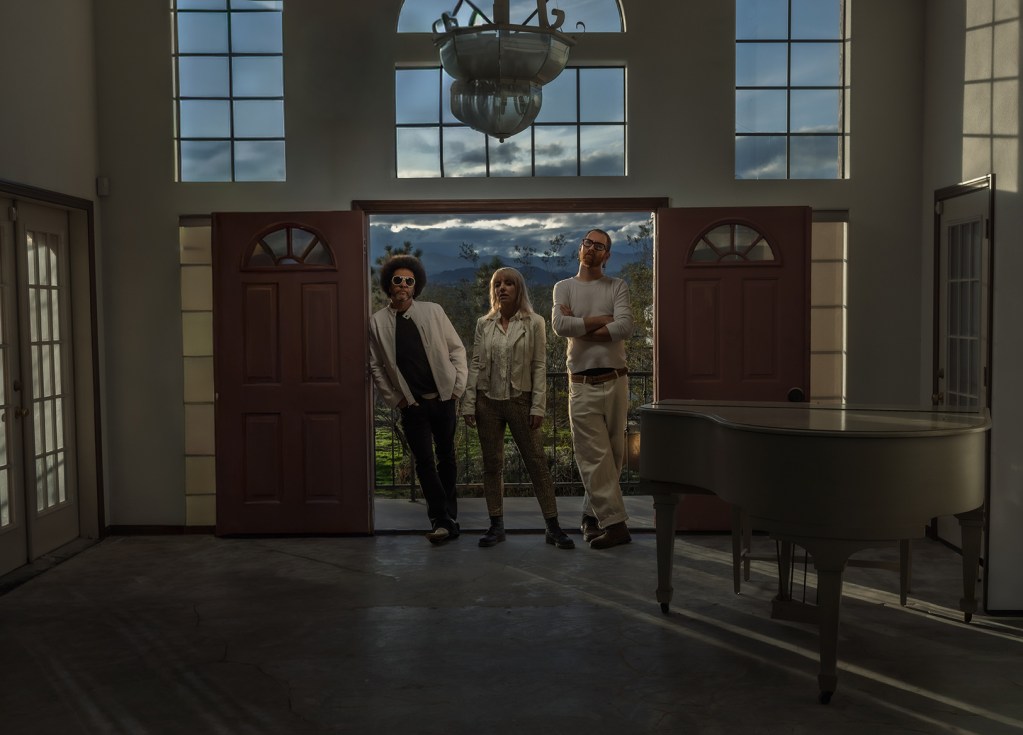
Beginning with a search for orientation, “Constellation” follows a figure suspended between holding on and letting go. The album’s opening stretch portrays a relationship under strain, with two people moving through the same fire while remaining emotionally distant from one another. The yearning heard in “Stay” introduces a paradox of intimacy without connection that deepens throughout the album’s middle section and is frequently expressed through surreal, dreamlike imagery.
As the album progresses, that uncertainty only deepens. “Hank the Dragon” looks inwards to find responsibility in estrangement and disillusion, while “Sometimes” steps back from personal heartbreak to question the very nature of faith and love itself. Together, these songs serve as a philosophical turning point, linking personal loss to larger questions of belief, meaning, and the fragile hope that keeps people moving forward in the absence of certainty.
Fittingly, “The Ending” closes the album’s journey with a sense of hard-earned acceptance. Listeners are invited to imagine themselves drifting endlessly, singing into the unknown. What begins with urgent questions about direction ultimately settles into an answer of surrender, release, and the peace of returning to the earth like ash on the wind.
Of course, none of this would matter if the music itself didn’t deliver. Sonically, the album pulls from prog rock, psychedelia, alt-pop, various post-genre influences, and richly layered synth textures. The result is adventurous, ambitious, and occasionally challenging. Expansive and cinematic in scope, the record is elevated by production that balances familiarity with innovation.
Those who appreciate the ambition of Roger Waters, the atmospheric vision of Vangelis, and the adventurous spirit of Prince may find plenty to admire in LANDROID’s most expansive work to date.
Follow Landroid on Instagram and Facebook.


![Charli xcx - SS26 [Credit - Henry Redcliffe]](https://i0.wp.com/glassefactory.com/wp-content/uploads/2026/05/Charli-xcx-SS26-Credit-Henry-Redcliffe.jpg?fit=680%2C510&ssl=1)


Leave a comment